Solar panels harness energy from the sun and convert it into direct current (DC) electricity. This is the same type of electricity stored in batteries. The efficiency, size, and orientation of the panels significantly impact the system’s performance.
Solar Charge Controller
A solar charge controller regulates the flow of electricity from the solar panels to the batteries. It prevents overcharging,protecting the battery’s lifespan. Advanced controllers, like those with Maximum Power Point Tracking (MPPT) technology, optimize energy harvesting.
Batteries
Batteries store excess solar energy for use when sunlight is unavailable. The capacity of a battery bank determines the system’s autonomy – the number of days it can operate without external power sources. Common battery types include lead-acid, lithium-ion (LiFePO4), AGM, and gel, each with its own charging and discharging characteristics.
Inverter
An inverter converts the stored DC electricity from the batteries into AC electricity, suitable for powering household appliances. Inverters vary in power output, with pure sine wave inverters generally providing cleaner power for sensitive electronics.
System Controller (e.g., Cerbo GX)
The system controller acts as the central control unit, managing and monitoring various components. It facilitates communication between devices, enabling remote monitoring and control. Features like Bluetooth and Wi-Fi connectivity allow users to track system performance and make adjustments.
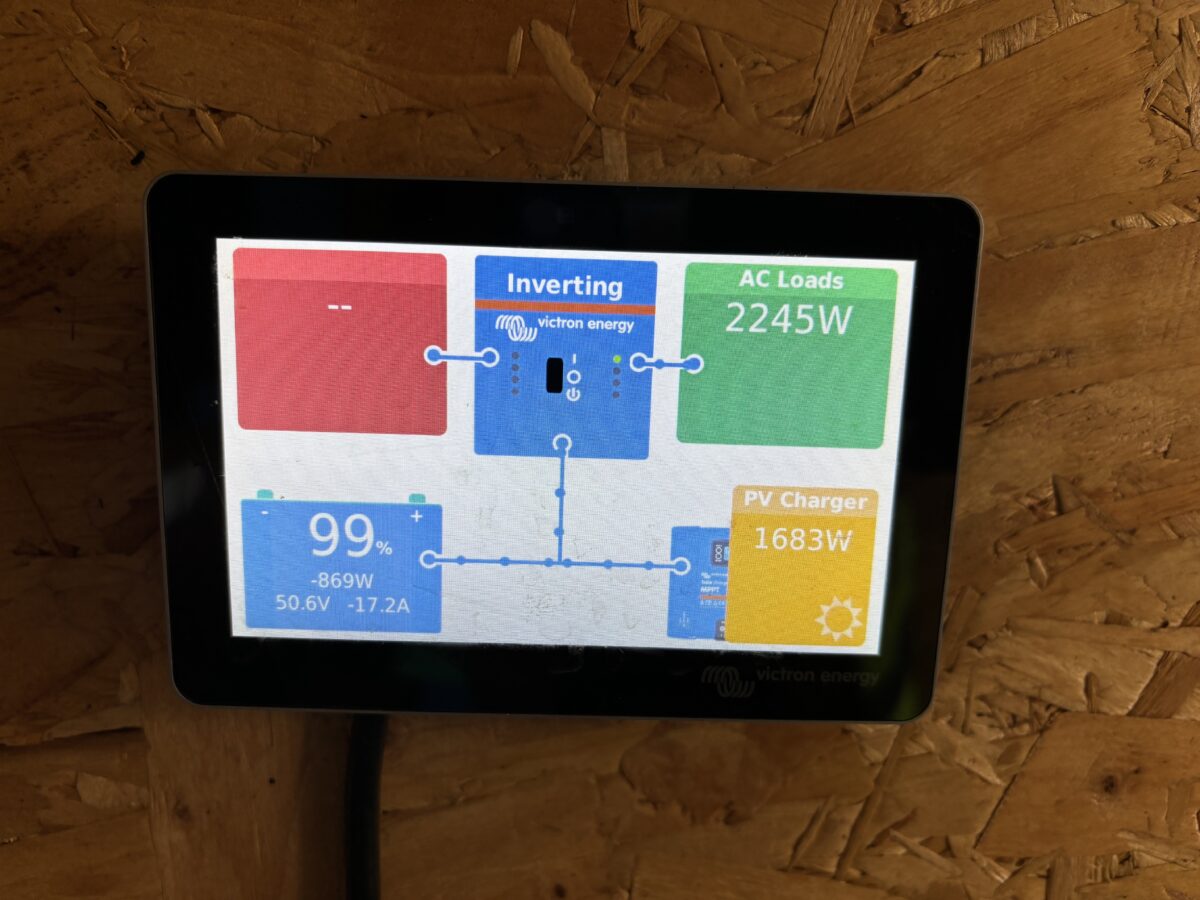
Display Interface (e.g., GX Touch 50)
A display interface provides a user-friendly view of the system’s status and allows for adjustments. Key features include real-time data, system settings, and manual control options.
Additional Components
For a complete off-grid system, consider these essential components:
Mounting Structures: Support the secure installation of solar panels.
Wiring and Connectors: Facilitate safe and efficient electrical connections.
Backup Generator: Provides power during extended periods of low sunlight or high energy demand.
Battery Temperature Sensors: Ensure optimal battery performance by monitoring temperature.
System Design Considerations
Solar Panel Wattage: Determine the appropriate panel size based on energy needs and sunlight availability.
Battery Capacity: Calculate the required battery storage based on daily energy consumption and desired autonomy.
Inverter Size: Select an inverter capable of handling peak power demands.
Component Compatibility: Ensure all components are compatible and work seamlessly together.
Take control of your energy future! Imagine generating clean, reliable power for your home with an off-grid solar system. Austen's Energy can help you explore the possibilities.
To provide the best experiences, we use technologies like cookies to store and/or access device information. Consenting to these technologies will allow us to process data such as browsing behaviour or unique IDs on this site. Not consenting or withdrawing consent, may adversely affect certain features and functions.
Functional
Always active
The technical storage or access is strictly necessary for the legitimate purpose of enabling the use of a specific service explicitly requested by the subscriber or user, or for the sole purpose of carrying out the transmission of a communication over an electronic communications network.
Preferences
The technical storage or access is necessary for the legitimate purpose of storing preferences that are not requested by the subscriber or user.
Statistics
The technical storage or access that is used exclusively for statistical purposes.The technical storage or access that is used exclusively for anonymous statistical purposes. Without a subpoena, voluntary compliance on the part of your Internet Service Provider, or additional records from a third party, information stored or retrieved for this purpose alone cannot usually be used to identify you.
Marketing
The technical storage or access is required to create user profiles to send advertising, or to track the user on a website or across several websites for similar marketing purposes.